
Seven Chakra
Meditation
The 7 Chakra Meditation is a transformative practice that focuses on aligning and activating the body’s seven main energy centers, or chakras. Each chakra governs specific physical, emotional, and spiritual aspects of our being. By understanding and meditating on each chakra, you can restore balance, release blockages, and experience deeper inner harmony. This page offers detailed insights into each chakra along with guided meditations to support your journey toward energetic healing and self-awareness.
7 Chakra Meditation – Awaken, Align, and Heal Your Energy Centers
The human body is more than just a physical form—it is a vibrant field of energy governed by seven primary chakras, or energy centers, that run along the spine from the base to the crown of the head. Each chakra is associated with specific physical functions, emotional states, and spiritual aspects of our life. When these chakras are balanced and activated, energy flows freely, promoting overall well-being, mental clarity, emotional stability, and spiritual growth.
The 7 Chakra Meditation is a powerful practice designed to bring awareness, balance, and vitality to each of these energy centers. Through focused meditation, breathwork, visualization, and sound, you can clear blockages, release stagnant energy, and restore the natural flow of prana (life force energy) throughout your body.
On this page, you will find:
A detailed explanation of each chakra, including its location, color, element, qualities, and signs of imbalance.
Guided meditations tailored to activate and harmonize each individual chakra.
Techniques and tips to deepen your practice and enhance the healing process.
Whether you’re new to energy work or seeking to deepen your spiritual practice, 7 Chakra Meditation offers a structured and deeply healing path to self-discovery, inner balance, and higher consciousness.
1. Muladhara Chakra - Root Chakra
The Muladhara Chakra, also known as the Root Chakra, is the first of the seven main chakras in the body. It represents the foundation of life and is closely tied to survival instincts, physical identity, and a sense of grounding.
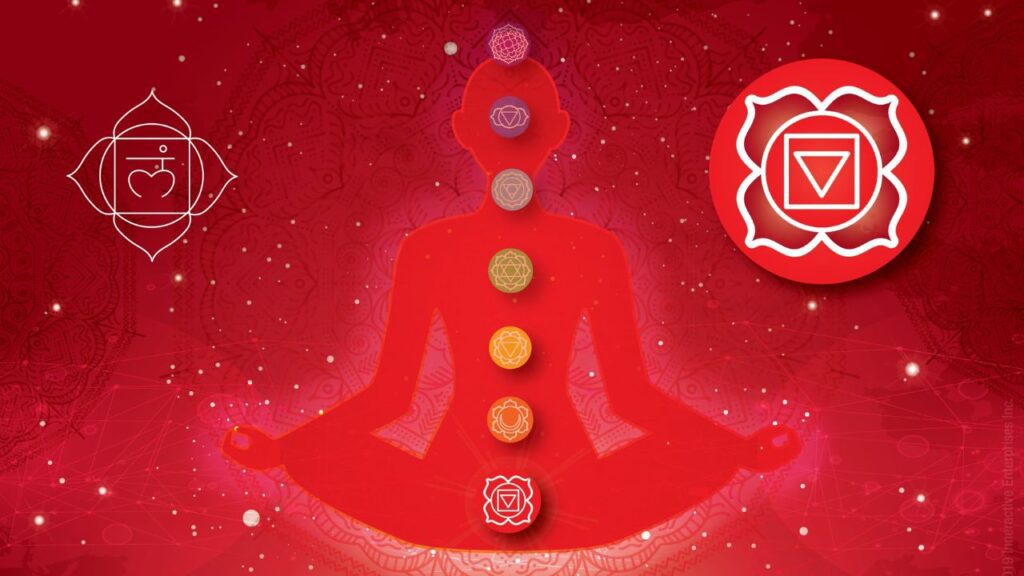
Muladhara Chakra
Location and Symbolism
Situated at the base of the spine near the perineum, this chakra is symbolized by a red, four-petaled lotus containing a square and a downward-pointing triangle. These symbols reflect stability, grounding, and the elemental connection to earth.
Element and Sense of Muladhara
The Root Chakra is associated with the Earth element, representing stability and rootedness. It governs the sense of smell, which is closely tied to memory and instinct, enhancing our primal awareness and survival mechanisms.
Psychological and Emotional Functions
This chakra governs our sense of safety, security, and trust in the world. A balanced Muladhara Chakra fosters feelings of confidence, stability, and belonging, while imbalance may manifest as fear, anxiety, or restlessness.
Physical Associations of Root Chakra
The Root Chakra is linked to the lower part of the body including the legs, feet, spine, and immune system. Imbalances may result in physical symptoms such as lower back pain, leg discomfort, and digestive issues.
Healing and Balancing Techniques
Balancing the Muladhara Chakra can be achieved through grounding activities such as meditation, yoga, affirmations, and breathwork. Supporting practices include using grounding foods, essential oils, mudras, and healing crystals.
Spiritual Significance of Muladhara
Spiritually, the Root Chakra is the seat of Kundalini energy and the foundation upon which the higher chakras are built. A stable and active Muladhara is essential for safe spiritual awakening and growth.
Signs of a Balanced Muladhara Chakra
When balanced, this chakra brings a strong sense of security, emotional resilience, physical vitality, and trust in life’s process. It supports a grounded and centered approach to challenges.
Muladhara Sadhana ( Advance Level )
2. Svadhisthana Chakra – Sacral Chakra
The Svadhisthana Chakra is the second energy center and governs pleasure, emotions, and creativity. It is the seat of desire and joy, influencing how we connect with ourselves and others.
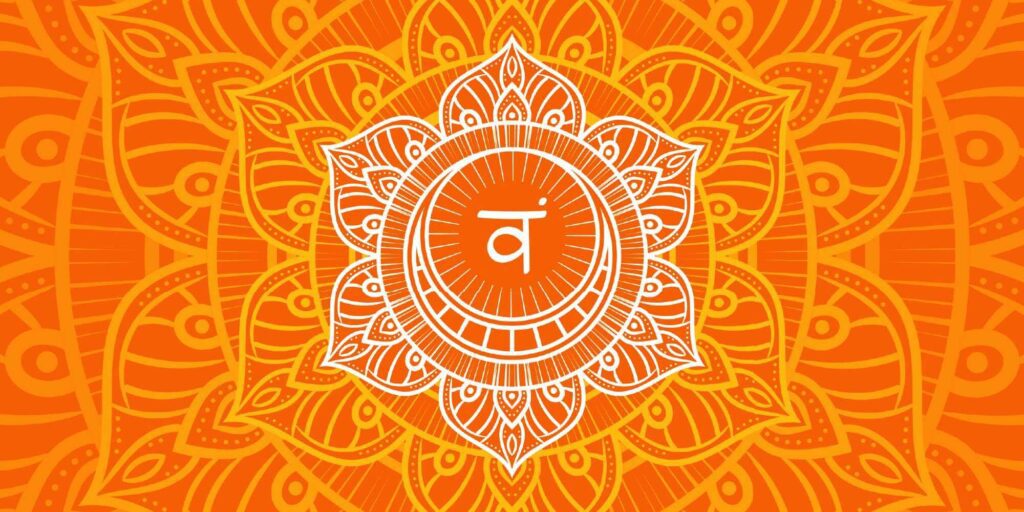
Swadisthana Chakra
Location and Symbolism
Located about two inches below the navel, this chakra is symbolized by a six-petaled orange lotus with a crescent moon. It represents flow, emotional balance, and creative potential.
Element and Sense of Swadisthana
Associated with the Water element, this chakra governs taste and relates to fluidity, adaptability, and sensuality.
Psychological and Emotional Functions
It governs our feelings, sexual energy, creative impulses, and ability to experience pleasure. Balanced Svadhisthana fosters openness, intimacy, and creativity.
Physical Associations of Sacral Chakra
Linked to the reproductive organs, kidneys, bladder, and hips. Imbalances may cause sexual dysfunction, reproductive issues, or urinary problems.
Healing and Balancing Techniques
Engage in creative activities, pelvic-opening yoga poses, sensual movement, and affirmations like “I honor my desires and creativity.” Use orange foods and sacral-healing oils.
Spiritual Significance of Swadisthana
It bridges the physical and emotional worlds. A healthy Sacral Chakra supports spiritual growth by encouraging joy, flexibility, and emotional intelligence.
Signs of a Balanced Swadisthana Chakra
Creativity flows freely, relationships are emotionally satisfying, and there is a sense of pleasure in life and acceptance of one’s emotions.
Swadisthana Sadhana ( Advance Level )
3. Manipurak Chakra – Solar Plexus Chakra
The Manipurak Chakra, or Solar Plexus Chakra, is the third chakra and governs self-esteem, willpower, and personal identity. It fuels transformation and confidence.
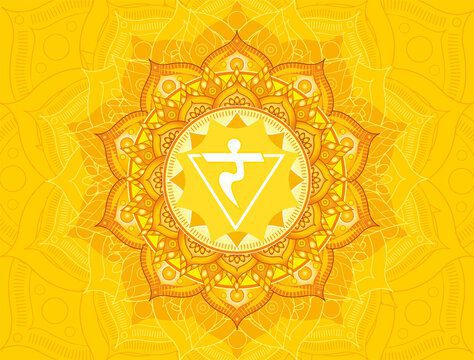
Manipurak Chakra
Location and Symbolism
Located above the navel and below the chest, it’s symbolized by a ten-petaled yellow lotus with a downward-pointing triangle in a circle. It reflects fire and inner strength.
Element and Sense of Manipurak
Associated with the Fire element and the sense of sight, it drives digestion, energy, and clarity of purpose.
Psychological and Emotional Functions
It governs self-confidence, motivation, and personal power. A strong Manipurak Chakra encourages leadership and the courage to pursue goals.
Physical Associations of Solar Plexus Chakra
Linked to the digestive system, pancreas, liver, and metabolism. Imbalances may cause digestive issues, fatigue, or eating disorders.
Healing and Balancing Techniques
Practice core-strengthening yoga, breath of fire (Kapalabhati), affirmations like “I am strong and confident,” and consume yellow foods or warming herbs.
Spiritual Significance of Manipurak
This chakra fuels the transformation of lower energies into higher purpose, enabling spiritual courage and action. Imabalance
Signs of a Balanced Manipurak Chakra
Confidence, assertiveness, effective decision-making, and a healthy sense of personal power. Imbalance Low self-esteem, lack of direction, aggression, or domination. May also lead to shame, guilt, or chronic fatigue.
Manipurak Sadhana ( Advance Level )
4. Anahata Chakra – Heart Chakra
The Anahata Chakra is the fourth chakra, governing love, compassion, forgiveness, and emotional healing. It acts as a bridge between the lower and upper chakras.
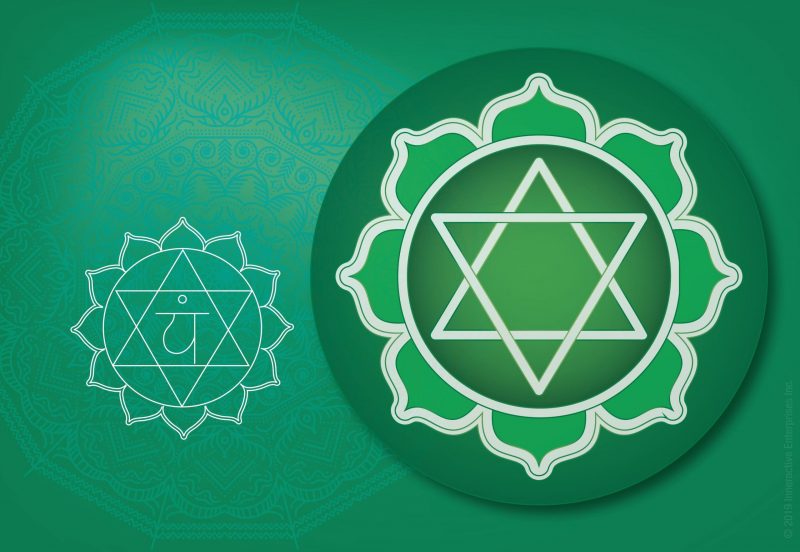
Anahata Chakra
Location and Symbolism
Located at the center of the chest, it is symbolized by a twelve-petaled green lotus with two intersecting triangles forming a six-pointed star.
Element and Sense of Anahata
Associated with the Air element and the sense of touch, Anahata represents openness, expansion, and connection.
Psychological and Emotional Functions
It governs love, empathy, kindness, and forgiveness. When open, we give and receive love freely and maintain emotional balance.
Physical Associations of Heart Chakra
Connected to the heart, lungs, chest, arms, and thymus. Imbalance may lead to heart conditions, respiratory issues, or immune dysfunction.
Healing and Balancing Techniques
Practice heart-opening yoga poses, gratitude, forgiveness exercises, affirmations like “I am open to love,” and use green foods or rose oil.
Spiritual Significance of Anahata
Anahata enables the unconditional love necessary for spiritual awakening and universal compassion.
Signs of a Balanced Anahata Chakra
Kindness, compassion, strong relationships, and emotional resilience. Imbalance Can include loneliness, bitterness, inability to forgive, jealousy, or fear of intimacy.
Anahata Sadhana ( Advance Level )
5. Vishuddhi Chakra – Throat Chakra
The Vishuddha Chakra is the fifth chakra and governs communication, self-expression, and truth. It allows us to articulate thoughts clearly and express our authentic self.
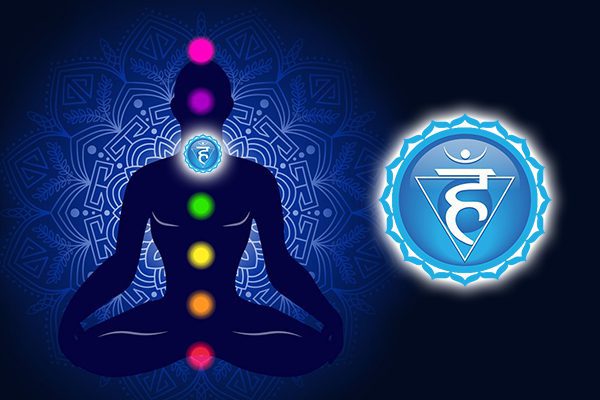
Vishuddhi Chakra
Location and Symbolism
Located at the throat, it is symbolized by a sixteen-petaled blue lotus enclosing a white circle representing purity and the element of ether.
Element and Sense of Vishuddhi Chakra
Its element is Ether (Space) and it governs the sense of hearing. It reflects openness, clarity, and resonance.
Psychological and Emotional Functions
Governs expression, listening, and honesty. A balanced Vishuddha supports confident communication and authentic living.
Physical Associations of Throat Chakra
Linked to the throat, neck, thyroid, jaw, and ears. Imbalances may cause sore throats, thyroid issues, or difficulty expressing oneself.
Healing and Balancing Techniques
Chanting, singing, journaling, blue-colored foods, and throat-opening yoga poses help balance this chakra. Affirm: “I speak my truth with clarity.
Spiritual Significance of Vishuddhi
Vishuddha opens the channel to higher truth and conscious manifestation through sound and expression.
Signs of a Balanced Vishuddhi Chakra
Clear communication, good listening skills, creativity in speech, and honesty. Includes shyness, gossiping, fear of speaking, lying, or talking excessively.
Vishuddhi Sadhana ( Advance Level )
6. Ajna Chakra – Third Eye Chakra
Ajna, the Third Eye Chakra, is the sixth chakra and governs intuition, perception, and inner wisdom. It is considered the center of insight and higher awareness.
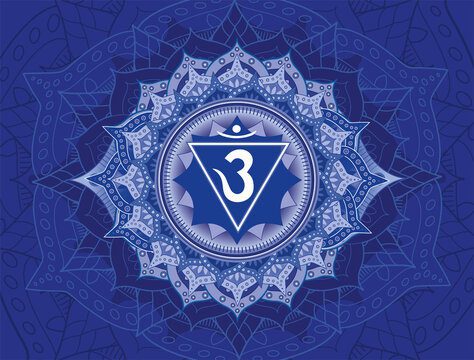
Ajna Chakra
Location and Symbolism
Located between the eyebrows, it is symbolized by a two-petaled indigo lotus. The petals represent the dual aspects of consciousness—intuition and logic.
Element and Sense of Ajna Chakra
It is associated with Light and the mind (not a physical sense), governing perception, intuition, and imagination.
Psychological and Emotional Functions
Ajna governs clarity, insight, visualization, and intuitive knowledge. It allows one to see beyond illusion and perceive truth.
Physical Associations of Third Eye Chakra
Linked to the brain, eyes, sinuses, and pituitary gland. Imbalances may lead to headaches, vision problems, or difficulty concentrating.
Healing and Balancing Techniques
Meditation, visualization, mindfulness, and working with dreams help activate this chakra. Affirm: “I trust my inner wisdom.”
Spiritual Significance of Ajna Chakra
Ajna is the seat of spiritual vision, offering insight into deeper truths and guiding higher consciousness.
Signs of a Balanced Ajna Chakra
Strong intuition, mental clarity, insight, imagination, and spiritual awareness. Imbalance Symptoms include confusion, overthinking, lack of focus, disconnection from intuition, or illusions.
Ajna Sadhana (Advance Level)
7. Sahasrara Chakra – Crown Chakra
The Sahasrara Chakra, the seventh and highest chakra, represents consciousness, divine connection, and spiritual enlightenment. It is the gateway to cosmic awareness.
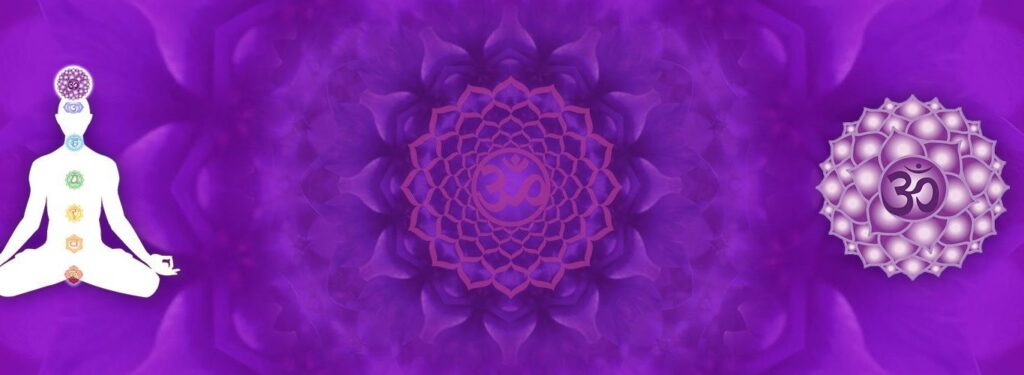
Sahasrara Chakra
Location and Symbolism
Located at the top of the head, it is symbolized by a thousand-petaled violet or white lotus, representing infinite consciousness.
Element and Sense of Sahasrara
It transcends elements and senses, representing pure consciousness. It is beyond duality and governs our spiritual connection to the universe.
Psychological and Emotional Functions
Governs enlightenment, awareness, presence, and connection to higher purpose and divine intelligence.
Physical Associations of Crown Chakra
Linked to the brain, nervous system, and pineal gland. Imbalances can cause migraines, neurological issues, or spiritual disconnection.
Healing and Balancing Techniques
Meditation, prayer, silence, and reflection foster balance. Use violet light visualizations and affirm: “I am connected to divine wisdom.
Spiritual Significance of Sahasrara Chakra
Sahasrara is the chakra of transcendence, representing union with the infinite and realization of the divine self.
Signs of a Balanced Sahasrara Chakra
Spiritual fulfillment, deep inner peace, clarity of purpose, and a sense of unity with all life. Imbalance Includes spiritual cynicism, confusion, disconnection, or obsessive intellectualism without heart.