Many people hear the term Yog Nidra and immediately think of sleep. The word Nidra itself means sleep, so it is natural to assume that this practice is simply a way to relax or fall asleep. However, the true meaning of Yog Nidra in the yogic tradition is very different.
Yog Nidra is not ordinary sleep. It is a special state of awareness where the body rests deeply while the mind remains conscious and receptive. In this state, the subconscious mind becomes open to guidance and transformation.
For centuries, yogis have used Yog Nidra as a powerful method to bring clarity to the mind and to plant deeper impressions within the subconscious.
What is Yog Nidra
Yog Nidra can be understood as conscious yogic rest. In this practice, the body enters a state of deep relaxation, almost similar to sleep, but the awareness remains awake.
When the body relaxes completely, the mind naturally becomes quieter. At this stage, the deeper layers of the mind become more accessible.
Normally, the subconscious mind stores our habits, patterns, and impressions from past experiences. These impressions influence our thoughts and behavior without us even realizing it.
Yog Nidra creates a unique state where the conscious and subconscious mind come closer together. In that moment, new positive impressions can be introduced into the mind.
Yog Nidra is Not Sleep
One of the most important things to understand about Yog Nidra is that it is not sleeping.
During normal sleep, awareness disappears and the mind becomes unconscious. In Yog Nidra, the body rests deeply but a subtle level of awareness continues to remain present.
This is why the practice is always done with guidance. A teacher or mentor guides the practitioner through the process so that awareness does not completely slip into ordinary sleep.
The goal is to remain in a state where the body feels as if it is sleeping, but the mind remains aware and receptive.
The Role of a Mentor in Yog Nidra
In the yogic tradition, Yog Nidra is usually practiced under the guidance of a teacher or mentor. The reason for this is simple.
When the mind enters the deeply relaxed state of Yog Nidra, it becomes highly receptive. Suggestions and guidance given during this stage can reach the subconscious mind directly.
A knowledgeable mentor understands how to guide awareness carefully so that the practitioner remains in the correct state between sleep and wakefulness.
This guidance is what makes Yog Nidra such a powerful practice for inner transformation.
The Ancient Yogic Tradition of Knowledge Transfer
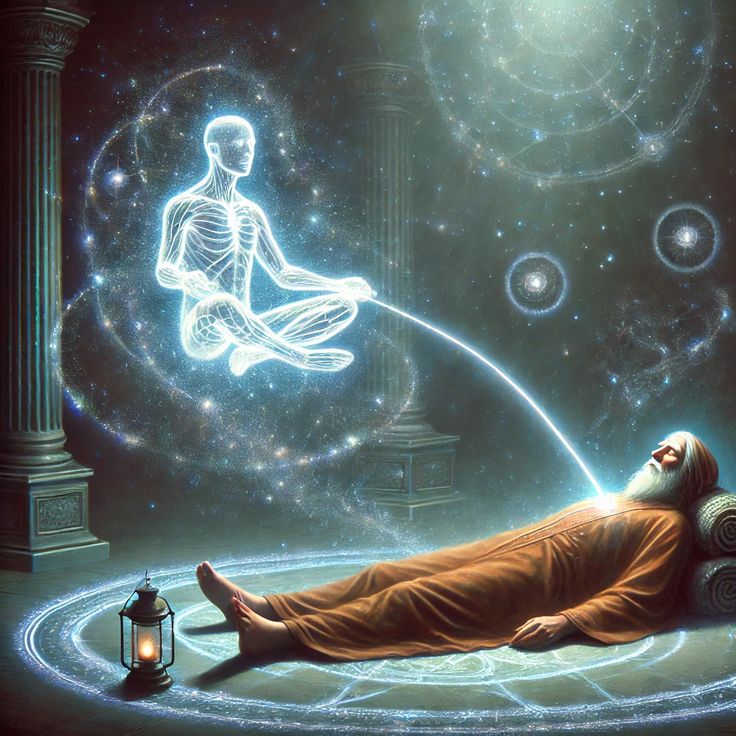
In ancient times, Yog Nidra was not used only for relaxation. It was also considered a powerful way for a teacher to transmit deeper understanding to a disciple.
The ancient yogis understood that when the mind becomes silent and receptive, learning can happen at a much deeper level.
In this deeply relaxed state, the disciple’s mind becomes open, and the guidance of the guru can leave strong impressions in the subconscious.
Through this process, complex spiritual teachings, insights, and inner understanding could be absorbed in a way that was not limited only to intellectual learning.
This is why Yog Nidra was often practiced under the presence and guidance of a realized teacher.
How Yog Nidra is Practiced
In Yog Nidra, the practitioner usually lies down comfortably in a relaxed position. The body is allowed to rest completely while the mind follows the instructions given by the guide.
The mentor slowly guides the awareness through different stages of relaxation and observation. Attention may move through different parts of the body, gradually releasing tension and calming the mind.
As the body relaxes deeper and deeper, the mind begins to enter a quiet and receptive state.
During this stage, the practitioner remains aware of the guidance being given, while the body experiences a profound level of rest.
The Power of the Subconscious Mind
The subconscious mind holds many impressions that influence our emotions, habits, and responses in life.
Most of the time, these patterns operate automatically without conscious awareness.
Yog Nidra allows us to enter a state where the subconscious mind becomes accessible. When the mind is calm and receptive, new positive impressions can be introduced.
Over time, these impressions can gradually influence the way the mind responds to situations, helping bring greater balance and clarity.
The Benefits of Yog Nidra
Yog Nidra is known for creating a deep sense of relaxation in both body and mind. Even a short practice can leave the practitioner feeling refreshed and mentally clear.
Because the mind enters a calm and receptive state, the practice can also help release mental tension and emotional stress.
Regular practice often brings improved mental clarity, deeper awareness, and a greater sense of inner balance.
Most importantly, Yog Nidra helps develop the ability to observe the mind without becoming lost in its constant activity.
Final Thoughts from Yog Guru Shree Ashish Yogi Ji
Yog Nidra is a profound practice that goes far beyond simple relaxation. It is a method that allows the body to rest deeply while the mind becomes open and receptive.
When practiced with proper guidance, Yog Nidra can help the practitioner access deeper layers of the mind and gradually transform inner patterns.
The ancient yogis understood the power of this state of awareness and used it as a way to share deeper knowledge with their disciples.
When you practice Yog Nidra with sincerity and proper guidance, you begin to discover that true rest is not only physical. Real rest comes when the mind becomes quiet, receptive, and connected to deeper awareness.